
Why Provo Sewer Backups Are Different From Anywhere Else
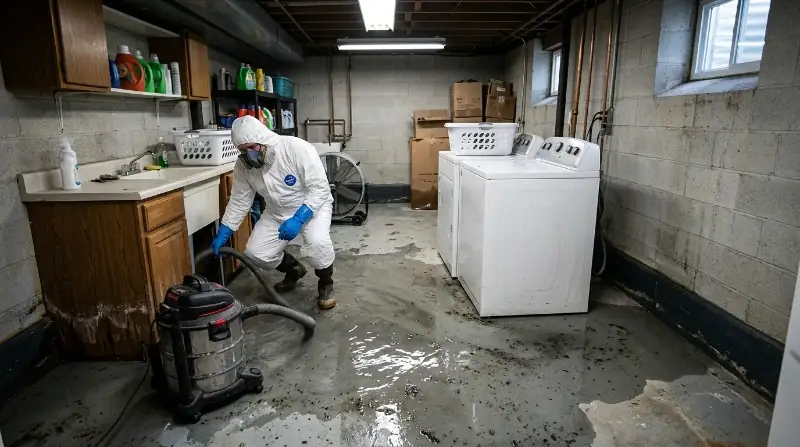
Lake Bonneville's ancient lakebed left Provo sitting on alkaline clay that expands in winter and contracts in summer. Pre-1980 homes in Joaquin, Riverside, Franklin, and the Center Street corridor have clay and cast iron laterals that move with that soil every year. Joint by joint, they crack. Roots enter. Backups happen — most often in March and April when Wasatch snowmelt pushes surge volumes into already-stressed pipes.
Provo City Code Section 10.03.060 places full responsibility for your sewer lateral on you, from the home to the city main connection. Provo City's 320-mile sewer system handles the main lines. Everything from your foundation to the street is yours. If a city main surges and forces sewage back through your floor drain, we confirm the source with Provo 311 for you. If the blockage is in your lateral, call us.
Provo Sewer Backup Risk by Season
Most Provo homeowners are surprised that backup risk peaks in spring, not summer. Snowmelt — not rain — is the primary driver in Utah County.
March – April
Highest RiskWasatch snowmelt saturates clay soil. Lateral compression + main line surge = floor drain backups across Joaquin, Riverside, and Franklin. NRCS SNOTEL data shows snowmelt volumes reached 216% of normal in peak years.
November – February
High RiskFreeze-thaw cycles crack pre-1980 clay and cast iron laterals. Joints separate. Root intrusion and partial blockages worsen under added snowmelt load. Pre-winter lateral inspection recommended for homes built before 1985.
August (BYU Surge)
Elevated33,000 students return to campus over a few weeks. Aging Joaquin and north campus laterals are stressed by sudden load increases. Floor drain backups in BYU-adjacent rental units spike every August — landlords should inspect before move-in week.
May – July & Sept – Oct
Lower RiskDry soil reduces lateral pressure. Best window for preventive camera inspection before winter. Root intrusion, grease buildup, and structural failures can still trigger backups — risk drops but does not disappear.
Warning Signs — How Fast to Act
These symptoms appear before a partial blockage becomes a full backup. Each has a different urgency level. Acting at the first sign also keeps any later sewer backup restoration small, since less drywall and flooring has to be rebuilt.
| Warning Sign | What It Means | Urgency |
|---|---|---|
| Sewage coming up through floor drain | Active Category 3 backup. Stop using all plumbing immediately. | Call Now |
| Sewage smell from basement drain | Partial blockage or dry trap. Likely hours from full backup during snowmelt. | Today |
| Multiple fixtures draining slowly | Blockage in the main lateral — all drains share one pipe. | This Week |
| Gurgling toilet after running sink | Air forced through partial blockage. System is under pressure. | This Week |
| Toilet bubbles when washer drains | Shared drain line partially blocked. Risk increases with each use. | This Week |
| Single slow fixture, no smell | Likely a fixture-level clog, not a main lateral issue. | Monitor |
Not sure which applies? Call (877) 394-0234 — we can identify the risk level in under two minutes.
What Happens Inside Your Home Hour by Hour
Every hour of delay after a sewer backup raises your restoration cost and health risk. Here is what CDC and IICRC data show: That clock is the reason we run 24/7 sewer cleanup in Utah County, UT, rather than waiting for business hours.
-
Hours 0–2
Standing Category 3 water contains E. coli, Norovirus, Hepatitis A, and Giardia (CDC). Do not walk through it without full PPE. Stop using all plumbing. Call a certified crew immediately.
-
Hours 2–6
Pathogenic bacteria absorb into porous materials — drywall, framing lumber, carpet padding, concrete block. Materials that absorb Category 3 sewage cannot be dried in place. They must be removed per IICRC S500 standards.
-
Hours 6–24
Sewage bioaerosols become airborne. EPA guidance notes that airborne sewage particles can spread pathogens through HVAC systems to rooms without direct water contact. Turn off forced-air heating and cooling immediately.
-
Hours 24–48
Mold growth begins on wet organic materials (EPA). A cleanup job that costs $4,000 at 6 hours can reach $10,000 or more at 48 hours.
-
48 Hours and Beyond
Structural damage compounds. Mold remediation becomes a separate scope. Insurance carriers may dispute coverage if documentation shows delayed response.
How Utah Hills Compares to Other Provo Sewer Services
Most homeowners call a plumber first. Plumbers clear blockages — they do not handle Category 3 biohazard cleanup, IICRC-protocol drying, or insurance documentation. Here is the full picture. When people compare companies for sewage cleanup, Utah homeowners tend to ask the same three things: how fast the crew arrives, whether the estimate is in writing, and who handles the insurance paperwork.
| What Matters | Plumbers Roto-Rooter, local |
National Chains ServPro, PuroClean |
Utah Hills Restoration |
|---|---|---|---|
| IICRC S500 Category 3 Protocol | ❌ Not certified | ⚠ Franchise varies | ✅ WRT & AMRT certified |
| Biohazard Disposal Documentation | ❌ Not provided | ⚠ Varies by location | ✅ Full manifesting included |
| Insurance Claim Documentation | ❌ Not their service | ✅ Yes | ✅ From hour one |
| Provo-Specific Local Knowledge | ⚠ Some local crews | ❌ National franchise | ✅ Utah County focused |
| Transparent Pricing Before Work | ⚠ Varies | ❌ Often estimate-only | ✅ Written scope upfront |
| 24/7 Emergency Response | ⚠ Emergency fees apply | ✅ Yes | ✅ No extra charge |
A plumber clears the blockage. Utah Hills Restoration handles everything after: Category 3 extraction, IICRC-protocol drying, antimicrobial treatment, and full insurance documentation. Each one is covered in our sewer backup services overview.
All Sewer Backup Services in Provo
Emergency Sewer Backup Cleanup
24/7 response, IICRC crew on site in 1–3 hours. Category 3 biohazard protocols from the moment we arrive.
Emergency Response →Sewage Cleanup
Full cleanup per IICRC S500 and S520. Porous material removal, containment, antimicrobial disinfection.
Sewage Cleanup →Sewage Water Removal
Industrial truck-mounted extraction of standing black water. Biohazard disposal documentation included.
Water Removal →Sewage Extraction
Containment-first protocols, biohazard manifesting, disposal documentation for insurance carriers.
Sewage Extraction →Sewage Decontamination
AMRT-certified. EPA-registered antimicrobials, HEPA air scrubbing, clearance testing — protects your family.
Decontamination →Sewer Backup Restoration
Full-service: cleanup, demolition, structural drying, rebuild coordination. Insurance documentation included.
Sewer Backup Restoration →Basement Sewer Backup Cleanup
Floor drain backups, finished and unfinished basements, groundwater intrusion. 24/7 response.
Basement Cleanup →Sewer Overflow Cleanup
Main line surges, Provo City 311 coordination, snowmelt overflow. We explain who is responsible — you or the city.
Overflow Cleanup →Sewer Odor Removal
AMRT-certified source elimination. Sewage smell after cleanup means contamination remains — we find it and remove it.
Odor Removal →How Much Will Your Sewer Backup Cleanup Cost?
Answer 5 questions about your basement type, square footage, and time elapsed. Get an instant Provo-specific estimate plus your insurance coverage assessment.
Estimates based on HomeGuide 2026 data · IICRC S500 protocol · No personal info required
Provo ZIP Code Sewer Backup Risk — By Neighborhood
Not all Provo ZIPs face the same backup risk. Pipe age, soil type, and proximity to the Utah Lake water table create significant variation across the city.
| ZIP Code | Key Neighborhoods | Primary Risk Factor | Peak Period | Risk Level |
|---|---|---|---|---|
| 84601 | Downtown, Franklin, Joaquin | Pre-1980 clay laterals, Center Street corridor aging mains | March–April snowmelt | Highest |
| 84602 | BYU Campus, North Provo | August surge from 33,000-student return, Joaquin rental density | August, March–April | High |
| 84604 | Grandview, Edgemont, Rock Canyon | Hillside drainage advantages, but older cast iron in lower sections | November–February freeze-thaw | Moderate |
| 84606 | Lakeview, West Provo, Riverside | Utah Lake water table rise — floor drain intrusion independent of main events | March–June water table peak | High |
Provo Lateral Pipe Age Timeline — When Your Pipes Were Built
The year your home was built determines what your sewer lateral is made of — and how likely it is to fail.
-
Pre-1960 homes — Joaquin, Franklin, Downtown core
Vitrified clay pipe. Joints sealed with oakum and lead — both deteriorate. Root intrusion and offset joints are the norm, not the exception. These laterals should have been replaced 20 years ago. If your home is pre-1960 and you have not had a camera inspection, do it before next March.
-
1960–1979 — Riverside, West Provo expansion, BYU corridor
Cast iron pipe. More durable than clay but corrodes from hydrogen sulfide gas produced by sewage. Joints are vulnerable. Lake Bonneville clay soil movement causes joint separation over decades of seasonal expansion and contraction.
-
1980–1999 — Grandview, Edgemont, early Lakeview
PVC plastic pipe begins replacing clay and cast iron. Significantly more durable and root-resistant. Joints are solvent-welded rather than packed. Backup risk drops substantially for homes built after 1980.
-
2000–present — Rock Canyon, Saratoga-adjacent, new construction
Modern SDR-35 PVC. Lowest failure rate. Backup events in this age group are typically caused by blockages (grease, wipes) rather than structural failure. Still vulnerable to main line surges regardless of lateral age.
Sewer Backup Cleanup Beyond Provo
Provo is home base, but the same crew covers the rest of the valley. Our Utah County sewer backup cleanup overview compares how each city handles its sewer, from Springville, where city code puts the lateral on the owner, to Spanish Fork, which runs a no-fault assistance policy for main-line backups. Further south we serve Mapleton, Salem, Payson, and Santaquin, plus the septic-only towns of Goshen and Elberta. Wherever you are, Utah sewage cleanup follows the same IICRC S500 steps; only the local sewer rules change.
North of Provo, the crew covers Orem, Pleasant Grove, American Fork, and Lehi, where canyon snowmelt and older downtown laterals drive most spring backups.
North of the Point of the Mountain, we handle sewage cleanup in Salt Lake City, West Valley City, Magna, Midvale, West Jordan, South Jordan, Sandy, Riverton, Draper, and Herriman. Response is the same 1–3 hours, 24/7, wherever you are.
Frequently Asked Questions
Does homeowners insurance cover sewer backup in Utah?
Standard HO-3 policies exclude sewer backup. You need a separate endorsement — typically $40–$250 per year — for $5,000–$25,000 in coverage. Most Provo homeowners discover this gap only after a backup. Check your declarations page before it happens. (Insurance Information Institute, 2026)
How much does sewer backup cleanup cost in Provo?
Category 3 sewage cleanup in Provo typically costs $2,000–$10,000, or $7–$15 per square foot depending on water category, affected area, and materials involved. Acting within the first 6 hours significantly reduces total cost. (HomeGuide 2026)
Who is responsible for sewer backup in Provo, Utah?
Under Provo City Code Section 10.03.060, the homeowner is responsible for the sewer lateral from the home to the city main. If a city main backup caused your problem, we report it to Provo City 311 for you — just call (877) 394-0234. If the backup is in your lateral, that is your responsibility.
Why do Provo sewer backups spike in March and April?
Wasatch snowmelt saturates Lake Bonneville clay soil, which expands and compresses sewer laterals. Combined with increased main line surge volumes, this creates the highest backup risk of the year in Joaquin, Riverside, and the Center Street corridor. NRCS SNOTEL data shows snowmelt can reach 216% of normal in peak years.