
West Jordan Runs Its Own Sewer System
Unlike most of the southwest valley, West Jordan operates its own wastewater system through the city's Public Works wastewater division: about 1.6 million feet of main, roughly 303 miles, in pipe from 8 to 42 inches made of concrete, clay, and PVC. About 9 million gallons a day flow to treatment. A small part of the city is served by the Jordan Basin Improvement District instead, so your sewer bill is the way to confirm.
Treatment happens inside the city at the South Valley Water Reclamation Facility, 7495 South 1300 West, on the west bank of the Jordan River. It opened in 1985, and an $18.3 million expansion finished in 2008 raised average capacity from 38 to 48 million gallons a day. West Jordan is one of five member entities, alongside Midvale, Midvalley, Sandy Suburban, and the Jordan Basin district.
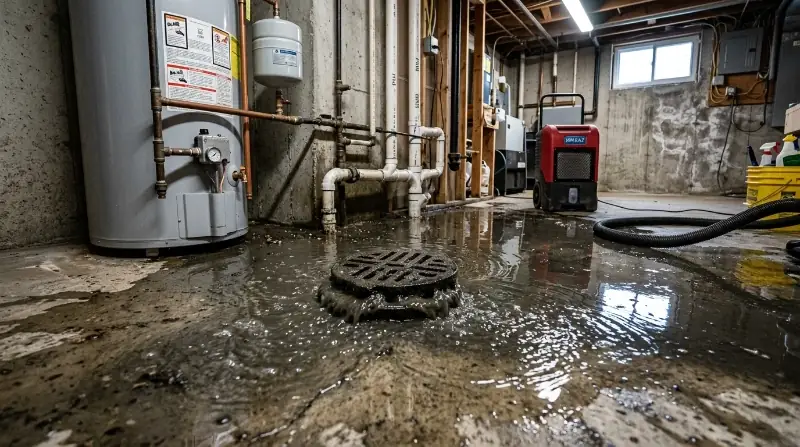
Who Pays: West Jordan's Lateral Rule
The city's wastewater page is unusually clear. Residents and businesses "are responsible for their lateral pipe from their building out to, and including, their connection" to the city main, including the part under the street. The city is responsible for its mains and manholes, and if a blockage in a city main backs sewage into a property, "the city is responsible for the repairs." If the blockage is in the private lateral, the owner pays.
That makes the cause worth proving. A camera inspection from your cleanout shows where the blockage sits. If neighbors on the same main are backing up at the same time, that points toward the main. Tell us when you call; we report it to the city, photograph the scene, and note the timing, because under Utah law a written notice of claim against a city must be filed within one year.
West Jordan Homes: From the Jordan River Core to the Oquirrh Bench
West Jordan was settled in 1848 and incorporated in 1941, and Gardner Village grew up around Archibald Gardner's 1850 mill. Most of the housing is much newer: Census data compiled from the ACS puts the median home at 1995, with the 1990s and 2000s together making up almost half of all homes. The older 1970s and 1980s neighborhoods sit closer to the Jordan River on the east side, while Welby, Copper Hills, and Jordan Hills climb the lower slopes of the Oquirrh Mountains.
The two halves fail differently. Homes from the 1970s and 1980s may still have clay or early plastic laterals that are now 40 to 50 years old, where roots and loose joints are the main risk. Newer bench homes have PVC laterals that resist roots, but long runs on sloped lots can settle and sag in backfill, creating a low spot that collects solids. Either way, the backup appears at the basement floor drain.
Basement Sewage Backup or Canal Water?
Not every flooded West Jordan basement is a sewer problem. In August 2020, KUTV reported that debris dammed a canal owned by Utah Lake Distributing Co.; it overflowed around 2:30 a.m. and flooded three basements, destroying one. In March 2023 the city warned residents that heavy snowpack plus rain could cause nuisance flooding in basements and yards.
The source decides both the cleanup and the claim. Sewage from a drain is Category 3 under the IICRC S500 standard, and porous materials come out. Canal or surface water may be a different category and typically falls under flood coverage rather than a sewer backup endorsement. We document the entry point and water condition on the first visit so your adjuster sees the right cause.
Sewage Cleanup in West Jordan: What to Expect
We arrive in 1–3 hours, contain the area, and extract with truck-mounted equipment. Carpet, pad, wet drywall, and insulation that touched sewage are removed; concrete and tile are cleaned and disinfected in place with EPA-registered antimicrobials. Drying runs to a measured standard set by comparing affected materials with unaffected ones in your home, typically about three to five days. Our guide to sewer backup cleanup time explains each stage.
With a median owner-occupied home value of about $492,500 (Census), a finished West Jordan basement is worth protecting. Cleanup usually runs about $7–$15 per square foot, and a water backup endorsement, typically $40–$250 a year, is what makes it an insured loss.
Fixing the Main Connection: What West Jordan Owners Pay For
West Jordan's rule puts the lateral and the connection at the main on the owner, so a repair may reach into the street. That means a permit, possibly traffic control, and pavement repair. Trenchless options help: a liner rebuilds a cracked lateral from inside, and pipe bursting replaces it between two small pits. Older homes near the Jordan River are more likely to have clay pipe; west-side homes have PVC that can still sag.
The city's sanitary sewer runs by gravity, separate from its storm drains and canals. Where the water table is shallow, groundwater infiltrates cracked pipe and adds flow during runoff. When a main surcharges, sewage rises in the lowest drain, and a backwater valve on that line keeps it out.
Sewage carries pathogens, so it is not a DIY job. Stop water use, keep children and pets away, avoid bleach, and photograph everything. Tenants should report it to the landlord in writing. Our Provo-based sewer backup cleanup crew serves all of West Jordan.
Our Response Across West Jordan
We dispatch from Provo, about 35 miles south, and serve every West Jordan ZIP: 84081 on the west bench, 84084 around Jordan Landing and the airport, and 84088 in the central and older eastern neighborhoods. There is no extra charge for nights or weekends, and you get a written estimate before work starts.
We also work in South Jordan and Riverton, both on Jordan Basin Improvement District lines, and in Magna to the northwest.
West Jordan Sewer Backup Cleanup: Common Questions
Does West Jordan pay for sewer backup damage?
If a blockage in a city main backs sewage into your property, the city says it is responsible for the repairs. If the blockage is in your private lateral, the owner pays.
How far does my responsibility go in West Jordan?
From your building out to and including the connection to the city main, even under the street, according to West Jordan's wastewater division.
Where is West Jordan's sewage treated?
At the South Valley Water Reclamation Facility at 7495 South 1300 West, inside West Jordan, which opened in 1985.
How fast can you reach West Jordan?
Our crew arrives within 1–3 hours, 24/7, in 84081, 84084 and 84088. Call (877) 394-0234.
My basement flooded from a canal. Is that a sewer backup?
No. Canal or surface water is a different source and usually falls under flood coverage. We document where the water entered so the claim goes to the right policy.