
Orem's Three ZIP Codes and What Each One Means for Sewer Backup Risk
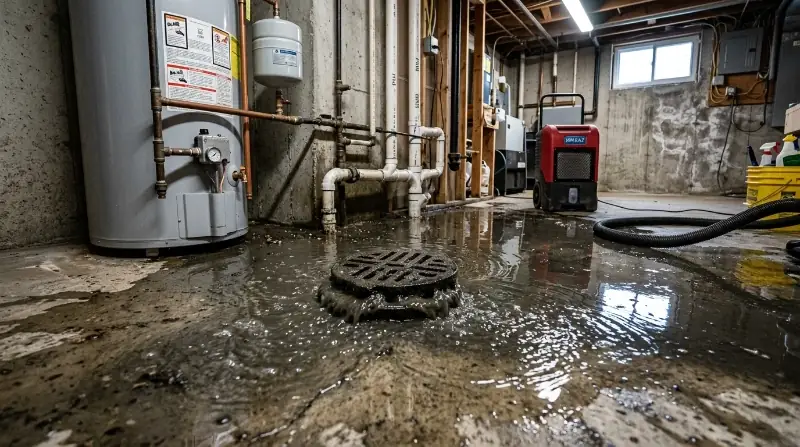
Orem is Utah County's second-largest city — approximately 100,000 residents across ZIP codes 84057, 84058, and 84097. When a lateral fails under one of Orem's densely developed residential blocks, the backup is Category 3 black water: raw sewage contaminating carpet, drywall, and subfloor within minutes.
Understanding Orem's geography is key to understanding its sewer backup problem. The city's three ZIP codes divide along a rough north-to-south axis, and each carries distinct infrastructure characteristics that drive different failure modes. Orem calls go to the same crew that handles sewer backup cleanup in Provo.
ZIP 84057 (North Orem) covers the oldest platted sections of the city — streets north of Center Street running toward Geneva Road and the western industrial corridor. Lots here were developed in the late 1950s and early 1960s, and many still sit on original laterals with oakum-lead bell joints. Shorter lot depths in this zone mean laterals run 30–50 feet from the house to the city main — shorter pipe means fewer failure points, but when joints do fail in this shallow depth zone, excavation costs are lower, which is the one silver lining. Root intrusion from older street trees planted along 1960s-era boulevards is the primary cause of joint cracking here.
ZIP 84058 (South Orem / UVU Area) contains the densest concentration of student rental housing in all of Orem, clustered around Utah Valley University on the south end of the city. Homes originally built as single-family 3-bedroom residences in the late 1970s and early 1980s have been converted to 6-, 8-, and even 10-person student rentals. The original 4-inch clay laterals installed for a family of four are now carrying sewage loads from multiple students. The result: chronic grease and paper product buildup, chronic partial blockages, and backups that often affect the lowest bathroom in the house — typically a basement unit where a student is renting the space at reduced cost.
ZIP 84097 (East Orem / Foothills) represents Orem's newer east-bench and foothills development, with pipe systems installed between 1985 and 2005. While PVC pipe dominates here and is more root-resistant than clay, the spring snowmelt inflow pattern creates a different failure mode. Wasatch Front snowpack that begins melting in March and April raises the groundwater table 18–24 inches across the Utah Lake drainage basin. This groundwater infiltrates laterals through any imperfect joint, adding hydraulic volume that overwhelms the capacity of even properly-maintained pipes during peak melt events.
Clay Vitrified Pipe — Orem's Oldest Lateral Material
The Geneva Road corridor and University Parkway area were built out primarily during the 1963–1978 construction boom that transformed Orem from a small agricultural community into a city of 50,000. During this period, clay vitrified pipe (VCP) was the standard material specified for residential sewer laterals throughout Utah County. VCP is a rigid, fired ceramic pipe typically installed in 4-foot sections connected with bell-and-spigot joints sealed with oakum rope and lead.
The structural lifespan of VCP, under ideal conditions, is approximately 50–70 years. The VCP installed in Orem during this construction boom is now 45–65 years old — at or past end of service life. Unlike PVC pipe, which fails gradually through delamination at joints, VCP fails through root intrusion cracks that widen progressively. A single root thread 1/16 inch in diameter can work its way through a bell joint over two to three growing seasons, then expand to fill the pipe diameter with root mass within five years of initial penetration. The homeowner notices slow drains. The plumber augments the line. The root regrows within 18 months. And eventually, a major root ball accumulates enough solid waste to cause a full backup.
Camera inspection — a $200–$400 investment — is the only way to assess the actual condition of a VCP lateral without waiting for failure. If you own a pre-1985 home in Orem and have never had a camera scope, you have no information about what is actually happening in your pipe 3–8 feet underground.
Orem's Student Rentals — Lateral Problems in 84058
The density of UVU student rentals in south Orem's 84058 ZIP is one of the most underreported contributors to sewer backup frequency in Utah County. Landlords who converted 1970s-era homes into multi-unit rentals did not upgrade the sewer lateral when adding bathrooms, laundry hookups, or kitchen access for each unit. The original 4-inch lateral designed to serve a maximum flow of approximately 150 gallons per day for a family of four is now handling 400–600 gallons per day from 6–10 occupants, each contributing paper products, cooking grease, and bathroom waste.
The cumulative effect is accelerated buildup of a grease-and-paper mat at any low point or partial obstruction in the pipe. This mat doesn't cause a full backup overnight — it reduces effective pipe diameter over months, then triggers a complete blockage after a weekend of heavy bathroom use (move-in weekends are a peak period for Orem lateral backups).
When the backup occurs in an occupied rental unit, the liability questions become immediate. Under Orem's sewer rules, the property owner — the landlord — is responsible for the sewer lateral from the foundation to the city main. The tenant's renter's insurance does not cover structural property damage. The landlord's property policy may or may not include sewer backup endorsement. Documenting the scene before cleanup begins is essential for any insurance claim. Our crew photographs and logs all affected areas, materials, and contamination measurements before extraction starts.
Orem Sewer Rules — What Orem Homeowners and Landlords Are Responsible For
Orem's sewer rules place the sewer lateral from the city main connection to the structure entirely within the property owner's maintenance responsibility. This means that if your clay VCP lateral collapses 40 feet from your foundation, you pay to excavate the street or yard, expose the pipe, repair or replace it, and restore the surface — in addition to the interior cleanup costs from the backup event.
If you suspect the backup originated in the city main rather than your lateral — for example, if three or more properties on your block are backing up simultaneously — we report it to Orem City Public Works before any cleanup begins. A documented city main event creates a record that may shift financial responsibility. We coordinate with city representatives on your behalf when main-line events affect our clients, which occurs several times per year along the 800 South and State Street corridors during peak spring inflow.
West Orem's Seasonal Groundwater Risk — The Utah Lake Effect
Properties in west Orem, particularly those west of State Street and below 600 North, sit on the eastern flank of the Utah Lake basin. The water table in this zone is naturally higher than in east Orem's bench areas, and during peak snowmelt season — typically late February through mid-April — the water table in west Orem rises 18–24 inches above its summer baseline. This seasonal fluctuation is well-documented by the Utah Division of Water Resources in the Utah Lake area groundwater studies.
What this means for homeowners: any crack, failed joint, or deteriorated seal in a sewer lateral below the seasonal high water table becomes a pathway for groundwater infiltration into the sewer system. When enough groundwater infiltrates enough laterals simultaneously during a high-melt event, the city main may temporarily surcharge — running above normal capacity — which creates backpressure on laterals throughout the affected zone. Even properties with otherwise sound pipe can experience inflow backup during these events because they are connected to a surcharging main.
The practical protection against this is a backwater valve — a check valve installed in the lateral that prevents sewage from reversing direction. Orem City does not require backwater valves on existing homes, but many restoration contractors and plumbers recommend them as a $500–$1,200 preventive measure for properties in the west Orem inflow risk zone. We document backwater valve absence or failure as part of our post-cleanup report for insurance and repair planning purposes.
What Needs to Go After Sewer Backup in Orem — IICRC S500 Protocol
The IICRC S500 standard is unambiguous on Category 3 water contamination: porous materials that have contacted sewage cannot be dried in place and cannot be sanitized with surface-applied antimicrobials. They must be removed, manifested as biohazardous waste, and disposed of at a licensed facility. The following materials must be removed per IICRC S500 whenever they contact Category 3 water:
- Carpet and carpet pad — without exception. No IICRC-compliant restorer will dry or sanitize sewage-contaminated carpet.
- Drywall up to at least 12–24 inches above the wet line — drywall is gypsum with paper facing, both of which wick sewage aggressively. Common practice is 12–24 inches above the visible waterline, minimum.
- Fiberglass batt insulation — cannot be decontaminated. Must be removed and bagged as biohazardous waste.
- OSB and particleboard subfloor — both materials wick Category 3 water rapidly. Solid 3/4-inch tongue-and-groove plywood may be assessed individually, but OSB is nearly always removed.
- Upholstered furniture — any upholstered item with sewage contact is biohazardous waste under IICRC S520.
- Cardboard boxes and paper goods — highly absorbent and not salvageable after Category 3 contact.
What can typically be saved with proper antimicrobial treatment per IICRC S520: concrete slab, ceramic tile, vinyl plank flooring, painted metal cabinets, solid wood furniture treated within 24 hours, and sealed-interior base cabinets above the contamination line. Our AMRT-certified technician (Marcus R. Webb holds both WRT and AMRT credentials) makes the call on salvageability at the scene, not in an office.
Orem Sewer Backup Cleanup — Cost Ranges by Scenario
The $7–$15 per square foot range for Category 3 sewage cleanup reflects the wide variability in what is affected. Those ranges assume a fast start, which is why we keep 24/7 sewer cleanup available across Utah County, UT, with no extra charge at night.
| Orem Scenario | Typical Range |
|---|---|
| Unfinished basement, 200 sq ft, floor drain backup | $1,500 – $3,200 |
| Finished basement, 300–400 sq ft, carpet and drywall affected | $4,500 – $8,500 |
| Finished basement, 500+ sq ft, full demo required | $7,000 – $14,000 |
| Student rental, multi-bathroom lateral event, 84058 | $6,000 – $18,000+ |
| First-floor kitchen/bath backup, crawl space involved | $3,500 – $7,000 |
Estimates based on IICRC S500 scope requirements for the Orem market. Actual costs vary with square footage, materials, and contamination level. Use the free calculator →
Why Orem's Finished Basements Raise Sewer Backup Costs
Many single-family homes in Orem have a finished basement. Finished basements are categorically more expensive to restore after sewer backup than unfinished ones. The reason is straightforward: finished basements contain carpet, drywall, insulation, drop ceilings, baseboards, and sometimes built-in cabinetry — all of which become biohazardous waste on Category 3 contact. An unfinished basement with a concrete floor and block walls costs $1,500–$3,500 to clean. Add carpet, drywall, and a rec room finish, and the same square footage costs $5,000–$12,000.
This cost differential is why Utah homeowners who have finished their basements should evaluate whether their homeowner's insurance includes a sewer backup endorsement. Standard HO-3 policies exclude sewer and drain backup entirely. An endorsement costs $40–$250 per year and typically provides $5,000–$25,000 in coverage — enough to cover most single-room backup events in Orem. Without it, you pay the full bill. We provide itemized estimates compatible with any insurer's claim format.
Frequently Asked Questions — Orem, Utah Sewer Backup Cleanup
How quickly can you reach me in Orem for sewer backup?
We respond to Orem sewer backup emergencies within 1–3 hours, 24/7. We serve all Orem ZIP codes — 84057, 84058, and 84097. Call (877) 394-0234 for immediate dispatch.
Does Orem homeowner insurance cover sewer backup cleanup?
Standard HO-3 policies exclude sewer backup unless a rider was added. Call us first — we document the scene, extract the sewage, and provide an itemized estimate for your adjuster. Cost typically runs $7–$15 per sq ft or $7,000–$15,000 for a finished basement. Call (877) 394-0234.
Why does sewer backup happen so often in Orem?
Orem's housing stock from the 1960s–1980s used clay vitrified pipe (VCP) that is now 45–65 years old. Root intrusion, joint failure, and sediment buildup are the leading causes. Spring snowmelt from the Wasatch Front also raises the groundwater table 18–24 inches, creating additional inflow pressure.
Can I clean up sewer backup myself in Orem?
No. Sewer backup is IICRC-classified Category 3 (black water) containing E. coli, Hepatitis A, Norovirus, and Giardia. Bleach alone cannot decontaminate porous materials — only IICRC S520-compliant antimicrobial protocol and controlled demolition with biohazard disposal can safely restore a sewage-flooded space. Call (877) 394-0234.
IICRC S500/S520 Cleanup Process — Orem
Every Orem sewer backup we respond to follows the identical 6-step IICRC S500 framework: stop source and contain plumbing; dispatch crew for 1–3 hour arrival; establish full PPE and negative-air containment; industrial truck-mounted sewage extraction with EPA-manifest biohazardous waste disposal; remove all porous materials per IICRC S500 contamination categories; apply EPA-registered antimicrobials per IICRC S520 and conduct HEPA air scrubbing with written clearance testing before reconstruction. We do not skip steps. We do not offer to dry carpet that contacted Category 3 water. Every scope decision is documented and photographed for your insurance file. Full IICRC S500 process details →