
Why BYU Campus Corridor Has Unique Sewer Backup Risk
The BYU campus corridor (ZIP 84602) has one of the highest concentrations of rental housing in Utah County and a seasonal risk pattern tied to the academic calendar. When 33,000 BYU students return in late August over 2–3 weeks, simultaneous occupancy of high-density rental units spikes sewer system load beyond design capacity in the University Avenue and 900 East corridor. August is an elevated-risk backup month in this ZIP — a move-in pattern that is far less pronounced elsewhere in Provo. Rental property owners in the BYU corridor frequently defer maintenance, meaning many laterals have known root intrusion or offset joints that have not been camera-inspected in years. The BYU corridor is covered by the same crew that handles Provo sewer backups across the city.
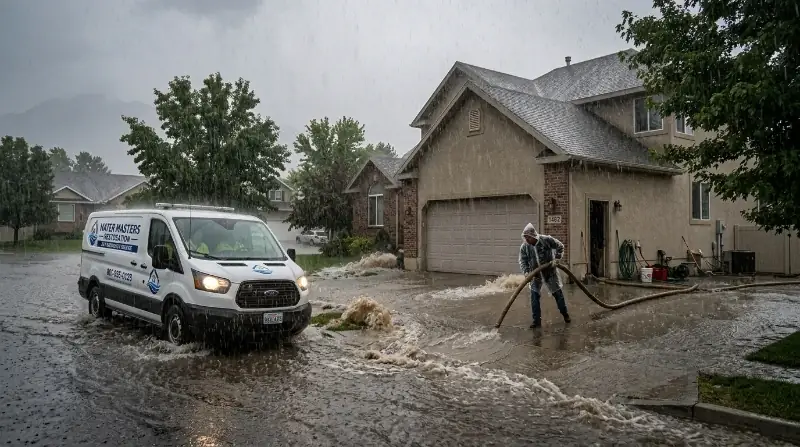
Pipe Age and Infrastructure in BYU Campus Corridor
University Avenue corridor housing ranges from 1950s to 1980s construction — the most problematic pipe eras in Provo. Older homes on 500 North and 700 North have vitrified clay laterals from the 1950s and 1960s. Mid-corridor properties from the 1970s have early cast iron. The combination of aging infrastructure and deferred rental property maintenance makes this corridor Provo's most unpredictable backup zone outside of Joaquin.
Frequently Asked Questions
How fast can you respond to a sewer backup in the BYU Campus Corridor?
Our crew reaches addresses around campus within 1 to 3 hours, day or night — including the August move-in weeks when calls spike. No extra charge for nights, weekends, or holidays. Call (877) 394-0234 for immediate dispatch.
What causes sewer backups in the BYU Campus Corridor?
The BYU campus corridor has one of the highest concentrations of rental housing in Utah County. When approximately 33,000 BYU students return in late August over 2–3 weeks, simultaneous occupancy spikes sewer load beyond design capacity. August is an elevated-risk backup month in this ZIP — a move-in pattern that is far less pronounced elsewhere in Provo. Deferred maintenance on rental laterals compounds the problem.
Does homeowners insurance cover sewer backup cleanup near BYU?
A standard Utah HO-3 policy excludes sewer backup; a separate endorsement typically costs $40–$250 a year for $5,000–$25,000 of coverage. Rental owners should check their landlord or commercial policy for a water backup endorsement, and tenants should check renters insurance for their belongings. We document each unit from hour one.
Why does the BYU area have a unique August backup risk?
The BYU campus corridor is the only Provo neighborhood with a documented August backup peak — every other area peaks in March during snowmelt. When approximately 33,000 students return in late August, the simultaneous surge in water usage across high-density rental housing spikes sewer system load beyond design capacity. Pre-1980 clay laterals in this corridor are particularly vulnerable to surges.
An Illustrative BYU Corridor Backup Scenario
In a scenario typical for this neighborhood: a property manager calls about backups in a 12-unit building on 900 East. Eight units affected. Camera inspection: complete root blockage at the 31-foot mark in the 1958 clay lateral. A mature silver maple planted in the 1960s has been growing through the joint for at least a decade. Multi-unit Category 3 event of this scope: typically $10,000–$18,000 for extraction, demo, and decontamination across multiple units. Lateral replacement under a parking lot: typically $8,000–$14,000 depending on depth and access. Actual costs vary with square footage, materials affected, and contamination level — this example is illustrative, not a quote. The property manager had no record of any prior camera inspection on the building in 66 years.
Highest-Risk Streets in the BYU Corridor
700–900 East between 200 and 500 North concentrates the oldest housing stock in the 84602 ZIP — 1955–1962 clay pipe with mature street trees overhead. Several blocks have limited documented inspection history based on housing age and era. University Avenue between 200 and 1200 North has elevated call frequency for multi-unit backup events. August is the only month of the year when a Provo neighborhood has a higher backup rate than March.
Seasonal Backup Risk in BYU Campus Corridor
Peak risk: August (BYU fall return — system load spike across the entire corridor simultaneously). Secondary peak: March snowmelt. The BYU corridor is the only Provo neighborhood with a documented August backup peak — every other Provo neighborhood peaks in spring. Rental properties on the 700–900 East block between 200 and 500 North are especially exposed to August backups because of their pipe age and occupancy density.
Why the BYU August Return Creates a Sewer Surge
BYU enrollment: approximately 33,000 students, the vast majority living in the 84602 ZIP. Provo's population now exceeds 115,000 and grows every August by 20,000+ students in the BYU corridor specifically. This annual population spike creates a documented system capacity stress event in late August every year without exception.
Just north of campus, North Provo's 84604 has newer homes but longer laterals that tend to sag with age.
Our IICRC S500 Cleanup Process
In BYU-area rentals we also photograph and log each unit separately, since landlords and tenants often file different claims. The cleanup follows the published protocol: containment, industrial extraction, porous material removal, AMRT decontamination, drying to a measured standard, and written clearance testing. See the full IICRC S500 process →
Cleanup Cost in BYU Campus Corridor
Most BYU corridor jobs fall in the Provo range of $2,000–$10,000, or $7–$15 per square foot. Shared laterals in converted houses can mean two or three units at once, which raises the total. In August, when backups cluster, a fast call is the cheapest decision you can make. Use the free cost calculator for a specific estimate →