
What IICRC S500 Category 3 Sewage Cleanup Actually Requires
Utah Hills Restoration is Provo's IICRC-certified sewer backup cleanup company. Every job follows IICRC S500 protocol — containment first, industrial extraction, porous material removal, EPA antimicrobial decontamination, structural drying, and written clearance before any reconstruction begins. These rules apply to every Utah sewage cleanup, whether the home is in Provo or anywhere else in Utah County.
Category 3 black water — raw sewage — is the most contaminated water classification in the IICRC S500 standard. It contains gross contamination including pathogenic bacteria, viruses, and parasites. The standard is explicit: all porous materials that absorbed Category 3 water must be removed. There is no exception for drying in place, regardless of how quickly the cleanup begins.
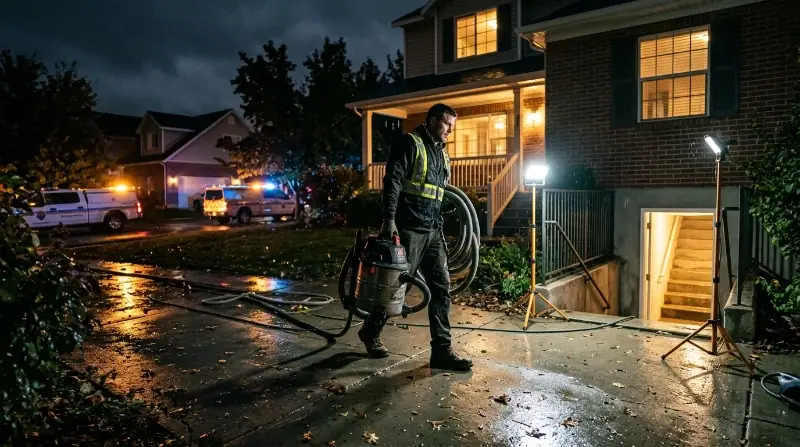
Our Sewage Cleanup Protocol — IICRC S500
- 1
Containment Setup
Physical containment barriers installed before any demo work begins. Prevents cross-contamination of unaffected areas. Negative air pressure maintained with HEPA air scrubbers.
- 2
Industrial Extraction
Truck-mounted and portable extractors remove standing black water. Category 3 sewage is manifested as biohazard waste — disposal is documented for your insurance carrier.
- 3
Porous Material Removal
All drywall, insulation, carpet, carpet padding, and subfloor materials that absorbed sewage are removed. This is not negotiable under IICRC S500 — no responsible contractor skips this step for Category 3.
- 4
AMRT Decontamination
EPA-registered antimicrobials applied to all remaining structural surfaces. HEPA air scrubbing continues throughout. Our AMRT-certified technicians follow S520 antimicrobial application protocols.
- 5
Structural Drying
Air movers and dehumidifiers run until calibrated moisture meter readings confirm dry standard across all test points. Drying logs documented daily for insurance claims.
- 6
Clearance & Reconstruction
Post-remediation verification before any reconstruction begins. Written clearance provided. Rebuild coordination available through our restoration network.
Sewage Cleanup Costs in Provo, Utah — 2026
| Scenario | Typical Cost Range | Notes |
|---|---|---|
| Floor drain backup — single room, <6 hours | $2,000–$4,000 | Limited porous material involvement if caught early |
| Basement backup — finished basement | $4,000–$8,000 | Drywall, carpet, and subfloor removal typical |
| Whole-floor backup — >24 hours | $7,000–$15,000+ | Expanded decontamination scope, mold likely |
| Per square foot — Category 3 | $7–$15/sq ft | HomeGuide 2026 national data |
What is IICRC S500 sewage cleanup?
IICRC S500 is the Standard and Reference Guide for Professional Water Damage Restoration. For Category 3 (sewage) events, it requires full containment, removal of all porous materials that absorbed black water, antimicrobial treatment of all surfaces, and verification testing before reconstruction. It is the industry standard that separates professional restoration from inadequate DIY or non-certified cleanup.
Can sewage-contaminated drywall be dried in place?
No. IICRC S500 requires removal of all porous materials that absorbed Category 3 sewage — drywall, insulation, carpet, and subfloor. These materials harbor pathogens that drying cannot eliminate. Any contractor who offers to dry Category 3-contaminated drywall in place is either not IICRC-certified or is cutting corners. Demand to see WRT or AMRT credentials before work begins.
Who handles sewage clean up in Provo, and how fast?
Utah Hills Restoration handles sewage clean up in Provo with IICRC-certified crews (WRT and AMRT) who follow IICRC S500 and S520 on every job. A crew arrives within 1–3 hours, 24/7, with a written estimate before work begins and insurance documentation from hour one.