
Why Lakeview & West Provo Has Unique Sewer Backup Risk
Lakeview and West Provo have a major risk factor: proximity to Utah Lake raises the water table to within 2–4 feet of the surface during spring. Floor drain backups in this area are frequently NOT main line sewage events — they are clean groundwater intrusion through the floor drain itself. This distinction changes the entire cleanup protocol. Category 2 groundwater intrusion has a very different response than Category 3 sewage. Misidentifying it — and applying sewage protocol to a clean water event — costs homeowners thousands of unnecessary dollars. Lakeview and West Provo get the same crew and the same 1–3 hour response as all of our sewer backup cleanup in Provo work.
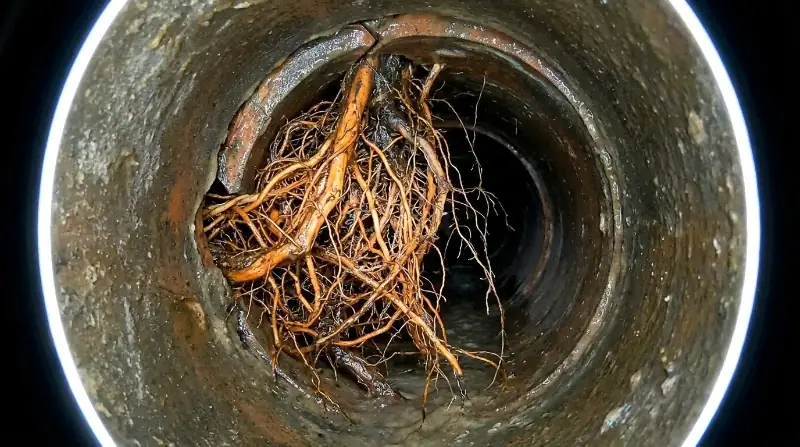
Pipe Age and Infrastructure in Lakeview & West Provo
Lake Bonneville clay soil in West Provo is among the most expansive soil types in Utah County. This clay swells when wet, shrinks when dry, and moves laterally installed in it regardless of pipe material or installation quality. Homes as recently built as the 1990s have documented lateral joint separation in West Provo from clay soil movement alone — a problem that did not exist in the first decade after construction.
Frequently Asked Questions
How fast can you respond to a sewer backup in Lakeview & West Provo?
Our crew reaches Lakeview and West Provo within 1 to 3 hours, 24 hours a day, with moisture meters and test equipment to tell groundwater from sewage on the spot. No extra charge for nights, weekends, or holidays. Call (877) 394-0234.
What causes sewer backups in Lakeview & West Provo?
Lakeview and West Provo have a major risk factor: proximity to Utah Lake raises the water table to within 2–4 feet of the surface during spring. Floor drain backups here are often groundwater intrusion through the drain itself, not Category 3 sewage. This distinction changes the entire cleanup protocol and cost. Source identification on arrival is critical to avoid unnecessary biohazard treatment.
Does homeowners insurance cover sewer backup cleanup in West Provo?
Sewer backup is excluded from a standard Utah HO-3 policy and needs its own endorsement, typically $40–$250 a year for $5,000–$25,000 of coverage. Groundwater seepage is treated differently again and may fall under a flood or water backup endorsement. Our report states which one you had, which is the first thing an adjuster asks.
How do I know if my West Provo backup is sewage or groundwater?
The key difference: Category 3 sewage backup typically affects toilets and floor drains simultaneously and has a strong odor. Groundwater intrusion through a floor drain near Utah Lake usually has no odor, does not affect the toilet, and occurs during or after heavy snowmelt. Our crew identifies the source on arrival — the protocol and cost differ significantly between the two.
An Illustrative West Provo Backup Scenario
In a scenario typical for this neighborhood: a homeowner on 1600 West calls at 7 AM: basement floor drain running backward slowly. No sewage smell. Toilet is fine. Utah Lake water table has risen overnight. Category 2 groundwater event — not sewage. Our crew extracts clean water, confirms no sewage contamination, dries the slab, and installs a temporary standpipe on the floor drain to prevent recurrence through melt season. Cost: in the $1,200–$1,800 range for a clean groundwater extraction event. Misidentified as sewage and treated with full Category 3 protocol, the cost could reach $5,000–$8,000 unnecessarily — source identification prevents this. Actual costs vary with square footage, materials affected, and contamination level — this example is illustrative, not a quote.
Highest-Risk Streets in Lakeview & West Provo
1200 West to 2000 West between Center Street and 500 South is the primary groundwater intrusion zone in Provo — closest to Utah Lake, lowest elevation, highest seasonal water table. Homes on 1400 West near Lakeview Park have elevated floor drain backup frequency during peak snowmelt season. Some homeowners in this corridor have installed overhead sewers or backflow preventers to manage the annual March–May groundwater risk.
Seasonal Backup Risk in Lakeview & West Provo
Peak risk: March–June — Utah Lake water table peaks with Wasatch snowmelt. In extreme snowpack years, water table elevation in West Provo has reached levels that cause spontaneous floor drain intrusion with no main line event, no blockage, and no sewage involved. The Utah Division of Water Resources documents 2–4 foot seasonal water table rise in the area west of 1200 West.
Utah Lake Water Table Data — West Provo Groundwater
Utah Lake sits at approximately 4,489 feet elevation. The Utah Lake shoreline area (west of 1200 West in Provo) has the lowest elevation in Utah County. Groundwater monitoring data from the Utah Division of Water Resources shows seasonal water table fluctuation in West Provo/Lakeview exceeds any other Provo neighborhood — directly determining floor drain backup frequency.
Our IICRC S500 Cleanup Process
In Lakeview we test the water first, because Utah Lake groundwater and sewage need different protocols. If it is sewage, the standard sequence follows: containment, industrial extraction, porous material removal, AMRT decontamination, drying to a measured dry standard, and written clearance testing. See our full sewage cleanup process in Provo →
Cleanup Cost in Lakeview & West Provo
West Provo cleanups usually fall in the Provo range of $2,000–$10,000, or $7–$15 per square foot. If testing shows clean groundwater rather than sewage, the job is often smaller, because Category 2 water does not require removing every porous material. Acting within 6 hours instead of 24 can halve the cost. Use the free cost calculator for a specific estimate →