
Elberta Homes Rely on Private Systems
Elberta is an unincorporated community near the center of Goshen Valley, with 180 residents in the 2020 Census across about 13.7 square miles. We are not aware of any public sewer system serving it, and neighboring Goshen, three miles east, relies entirely on septic according to its 2022 General Plan. For practical purposes, an Elberta backup is almost always a private system problem: the line from the house, the septic tank, or the drain field.
Onsite wastewater systems in Utah are regulated under state rule R317-4 and administered through local health departments, so repairs or replacements usually require a permit. We handle the sewage cleanup inside the home and outbuildings; a septic contractor pumps, inspects, and repairs the system.
A Town Shaped by Water
Elberta began as Mt. Nebo, and most settlers left after the water supply failed in 1901. New Yorker Matthew B. Whitney bought the site in November 1907 and renamed it after the Elberta peach. Today the community centers on the junction of US-6 and SR-68, and much of the surrounding land is farmland, including the Church's Elberta Valley agricultural operation and Brigham Creek Dairy.
That farm setting matters for septic systems. Irrigated fields raise soil moisture, heavy equipment can crush shallow lines, and drain fields near ditches or low ground stay wet longer in spring. A drain field that cannot absorb water pushes sewage back toward the house, usually showing up first in a tub, shower, or floor drain on the lowest level.
Signs Your Elberta Septic System Is Backing Up
- Gurgling drains or toilets after laundry or long showers
- Slow drains on the lowest floor, or in a manufactured home's tub first
- Sewage odor in the house or around the tank lid
- Wet, soggy, or unusually green ground over the drain field
- Wastewater surfacing in the yard
At the first sign, cut water use to the minimum and schedule a pump-out and inspection. A tank that is overdue for pumping is the most common and cheapest cause to fix.
Private Wells and Sewage Backups
Many rural Goshen Valley homes also rely on private wells, and south Utah County as a whole depends on springs and wells for drinking water. When sewage surfaces outside or a system fails near a wellhead, health agencies recommend having the well water tested before drinking it, and private well owners are responsible for that testing. If your septic system has backed up or overflowed outdoors, add a well test to the list alongside the cleanup.
Septic Sewage Cleanup in Rural Homes
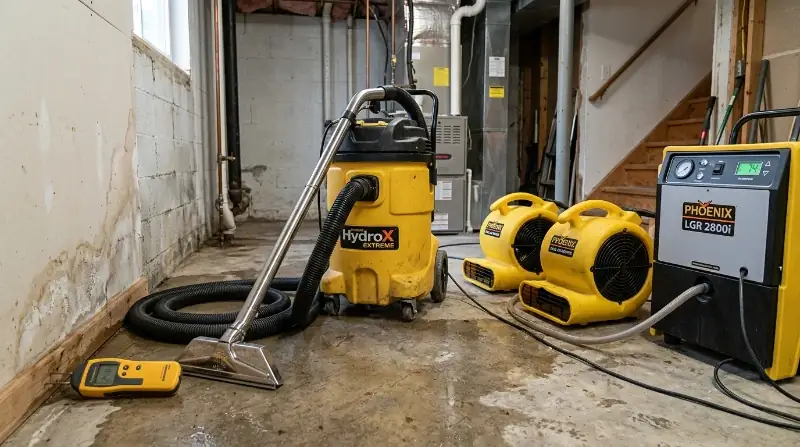
Septic sewage is Category 3 under the IICRC S500 standard, the same as city sewage. Carpet, pad, insulation, and drywall that wicked water are removed; subfloors and framing are cleaned, disinfected with EPA-registered antimicrobials, and dried to a measured standard. In manufactured homes, we check the subfloor and the space beneath, where sewage can pool out of sight. Farm outbuildings and shops get the same treatment when they are affected.
Avoid shop vacs, household cleaners, and especially mixing bleach with ammonia-based products, which releases toxic fumes. Stop water use, keep children and animals away, and call. Our sewage cleanup page explains each step.
Insurance for Rural Septic Backups
Standard homeowners and farm dwelling policies generally exclude water that backs up through drains, and a septic backup is usually treated that way. A water backup endorsement, typically $40–$250 a year, is what covers cleanup and damage to the home; repairing the septic system itself is treated as maintenance. Check whether your endorsement names septic systems. Our photos and itemized estimate are written for your adjuster.
Keeping a Rural Septic System From Backing Up
The U.S. EPA recommends having a household septic system inspected by a professional at least every three years and pumped typically every three to five years, depending on tank size and how many people live in the home. Larger farm households, guest quarters, or a shop with a bathroom on the same system may need more frequent pumping.
Between service visits, spread laundry across the week instead of running several loads in one day, fix running toilets and leaky fixtures, keep grease, wipes, and chemicals out of drains, and keep vehicles, livestock, and heavy equipment off the tank and drain field. Divert roof runoff and irrigation water away from the drain field so the soil can absorb wastewater. Know where your tank lid is before you need it; a pumper who can find it quickly can relieve a backup the same day.
The Line From House to Tank: Where Elberta Backups Start
On a rural property, the pipe between the house and the septic tank does the same job a city lateral does, carrying wastewater by gravity, but there are no manholes, no trunk sewers, and no treatment plant downstream, only your tank and field. Many backups start in that short line rather than the tank. Older farmhouses may still have cast iron or clay pipe with cracked joints, and the inlet baffle of an old concrete tank can crumble and block the inlet.
Irrigation season raises the water table, and saturated ground around the drain field cannot absorb more wastewater, so it backs up toward the house. Ditches and storm runoff near the field make it worse. A cleanout on the house line gives a pumper a place to check flow and clear a blockage without pulling the toilet. A backwater valve is designed for city mains and will not fix a full septic tank.
If a rental house or farm worker housing on your land backs up, the owner is responsible for the system and the cleanup. Stop water use, keep everyone out, and call. Our sewer backup cleanup crew from Provo drives out to Goshen Valley.
Sewer Backup Cleanup Elberta Response
Elberta is about 33 miles from our Provo base, roughly 41 minutes via Santaquin and US-6, and our crew still arrives in 1–3 hours, 24/7, with no extra charge for distance, nights, or weekends. Tell us whether the backup is in a house, a manufactured home, or an outbuilding so we bring the right setup.
Elberta calls usually route through Santaquin, and Goshen three miles east has the same septic setup. The Utah County overview covers every community we serve.
Elberta Sewer and Septic Backup: Common Questions
Is there public sewer in Elberta?
We are not aware of any. Elberta is unincorporated, and neighboring Goshen relies entirely on septic. Most Elberta backups involve a private septic system.
Is a septic backup Category 3?
Yes. Septic sewage is Category 3 under IICRC S500, so porous materials must be removed and surfaces disinfected.
Should I test my well after a septic backup?
If sewage surfaced outdoors or the system failed near your wellhead, health agencies recommend testing private well water before drinking it.
Do you charge extra to come out to Elberta?
No. There is no extra charge for distance, nights or weekends. Our crew arrives within 1–3 hours, 24/7. Call (877) 394-0234.
Who repairs the septic system?
A licensed septic contractor; repairs usually require a health department permit. We handle the cleanup inside the home.